
A construction logistics diagnostic
How we automated a 60-vehicle fleet, ended the manual call chain, and saved ₹54 lakh+ in salaries for Tierra Contracting.
From managing logistics through phone calls and laggy spreadsheets to a silent, WhatsApp-based system that runs dispatch on its own.
- Client
- Tierra Contracting
- Industry
- Construction · Heavy logistics, Kochi
- Featuring
- Auto-dispatch · WhatsApp ERP
- 1 → 7+Sites, with no additional admin staff
- ₹54L+Direct salary savings
- Real timeData latency — down from 14 days
- 100%Driver adoption
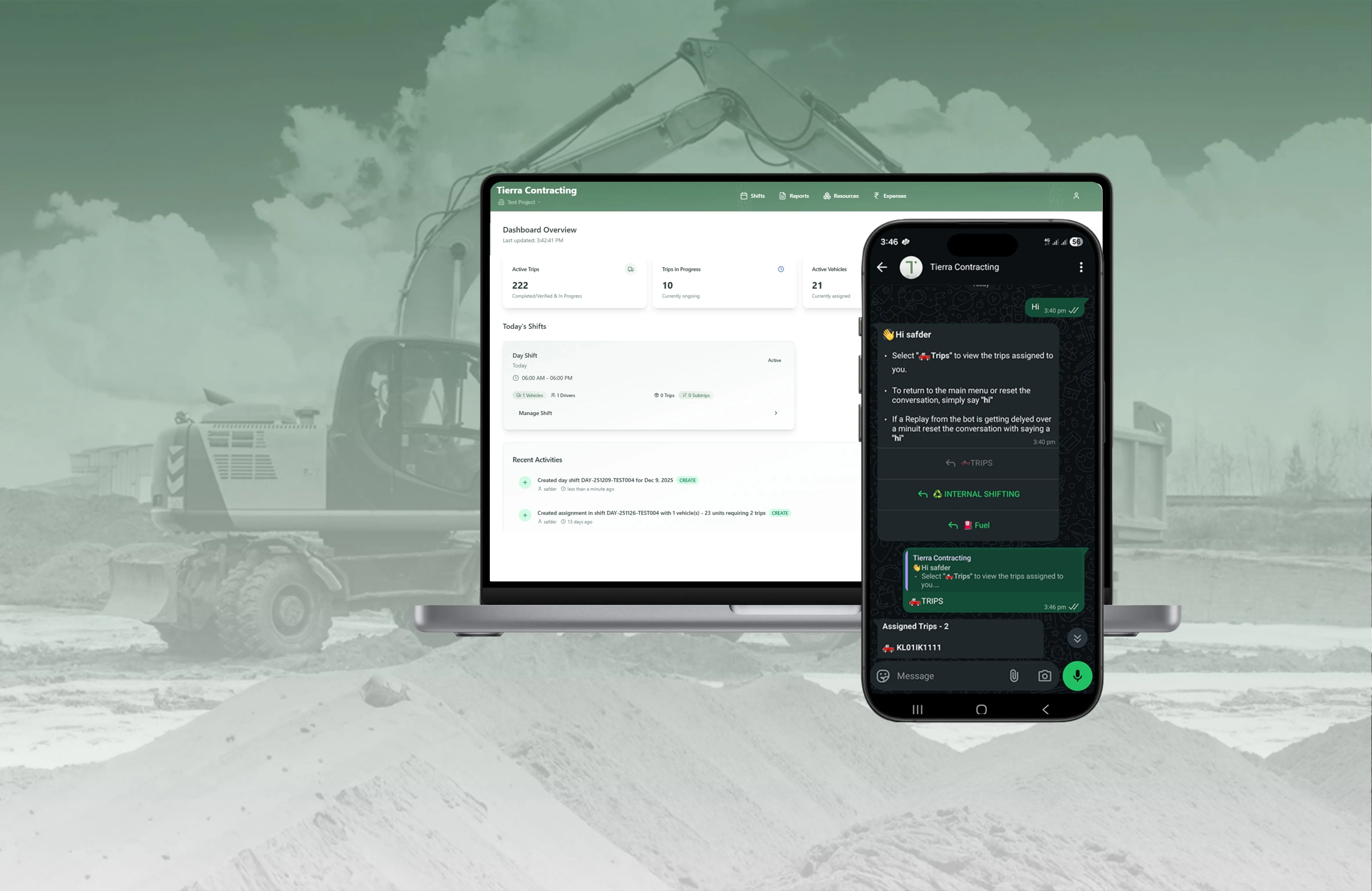
We were a modern construction company running on phone calls and memory. Our coordinators were burnt out, our data was weeks old, and our ‘cloud software’ was just a digital notebook nobody used. Emilda & Co. didn’t just fix our tech; they silenced the chaos. Now, the system does the talking.
Situation
A modern construction partner, running on phone calls and memory.
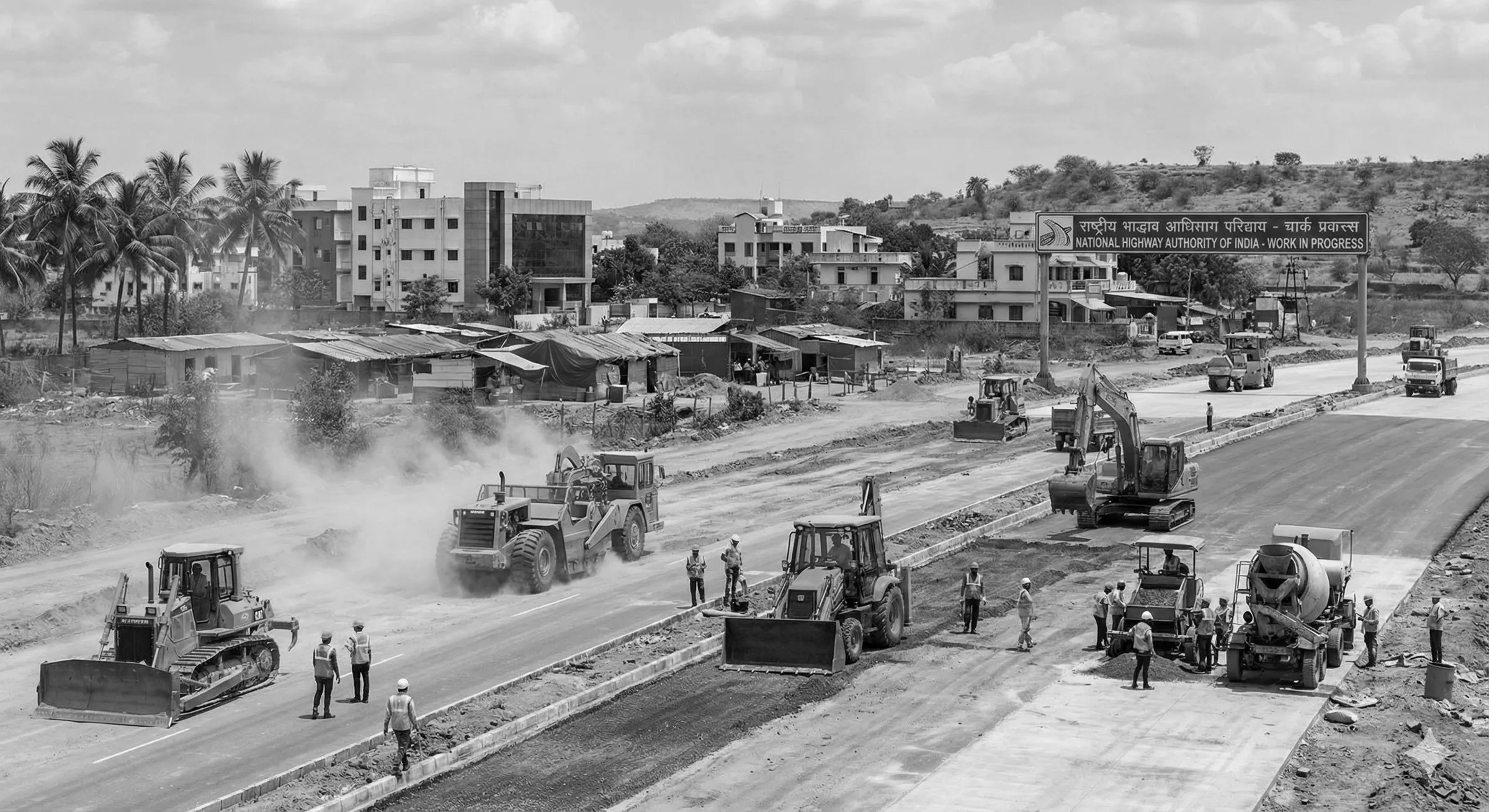
Tierra Contracting is a construction partner in South Kalamassery, Kochi, managing heavy logistics (FMS/TMS) for large infrastructure projects. Tierra had the fleet — 60+ vehicles — but its operations were held back by a manual, reactive chain of command.
The communication gridlock
Dispatch was a game of telephone. The site engineer called the project manager, the project manager called the coordinator, and the coordinator spent six hours manually calling 60+ drivers just to assign trips. Resources sat idle while phones rang.
The software nobody used
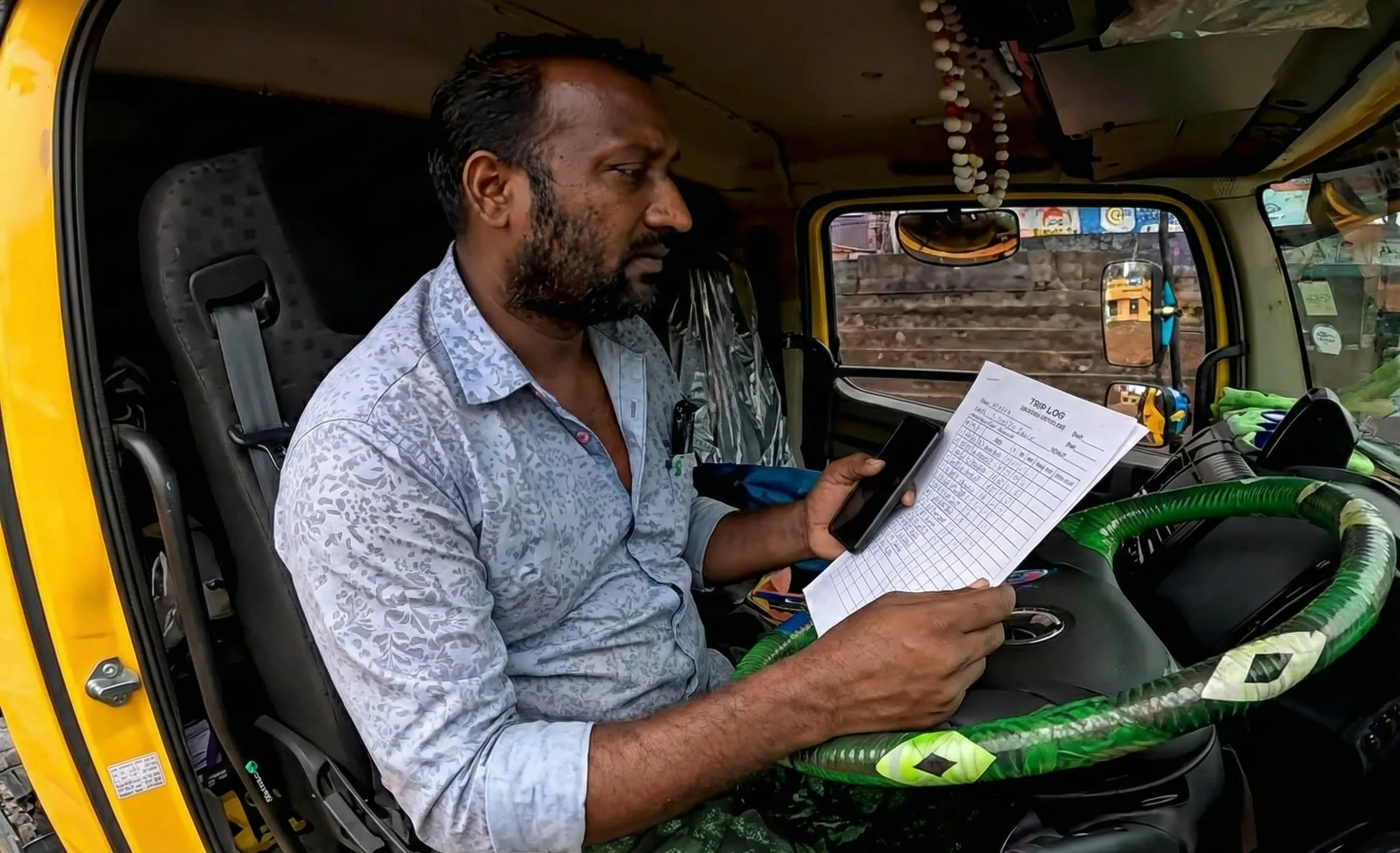
Tierra had invested in a custom Azure web app, but it was little more than a glorified spreadsheet. It was so slow and unfriendly that drivers refused to use it live.
The end-of-day data dump
Because the software failed its users, drivers waited until 8:00 PM to batch-upload data from memory or messy notes. Accuracy was close to zero, and head office was making decisions on week-old guesswork.
The operational bleed rate: est. ₹54 lakh in salaries and stalled growth
- Direct cash burn. Tierra was paying for a large data-entry team and multiple coordinators at every site just to manage phone traffic and type up handwritten notes.
- The scalability ceiling. Tierra couldn’t bid on new projects because its best people were stuck babysitting a broken process.
Solution
From verbal coordination to digital dispatch.
We built a system where the software acts as the coordinator.
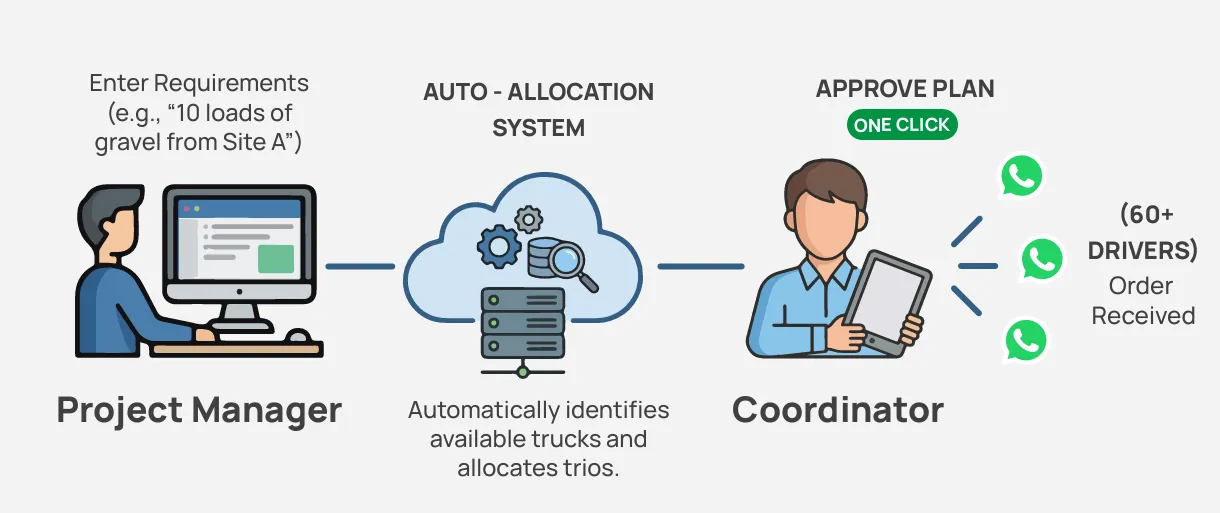
1. Silent dispatch: the auto-allocation engine
We removed the manual phone chain. The project manager now enters the requirement — for example, “10 loads of gravel from Site A” — and the system identifies available trucks and allocates the trips.
The coordinator approves the plan in one click. 60+ drivers receive their orders instantly on WhatsApp. No phone calls. No confusion.
2. The invisible interface: a WhatsApp ERP
For drivers, user experience is data integrity. We replaced the slow web app and built the entire interface inside WhatsApp.
Drivers don’t log in. They send “Hi” to start and upload a photo to close a trip. Data is captured at the moment of action, practically eliminating ghost trips and memory errors.
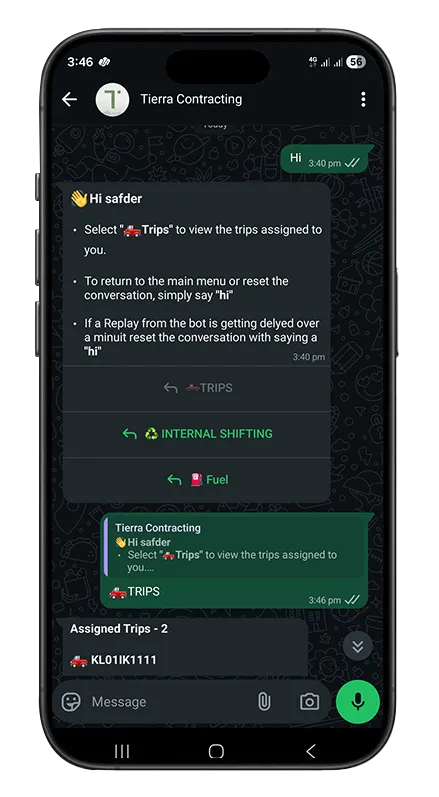
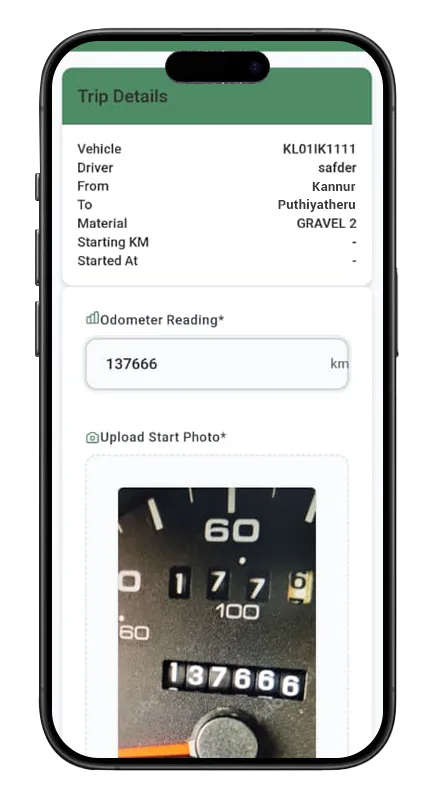
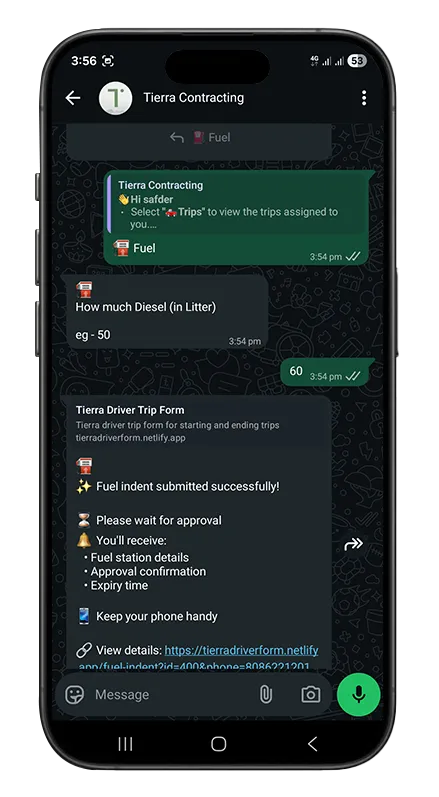
3. Buffer-time revenue logic
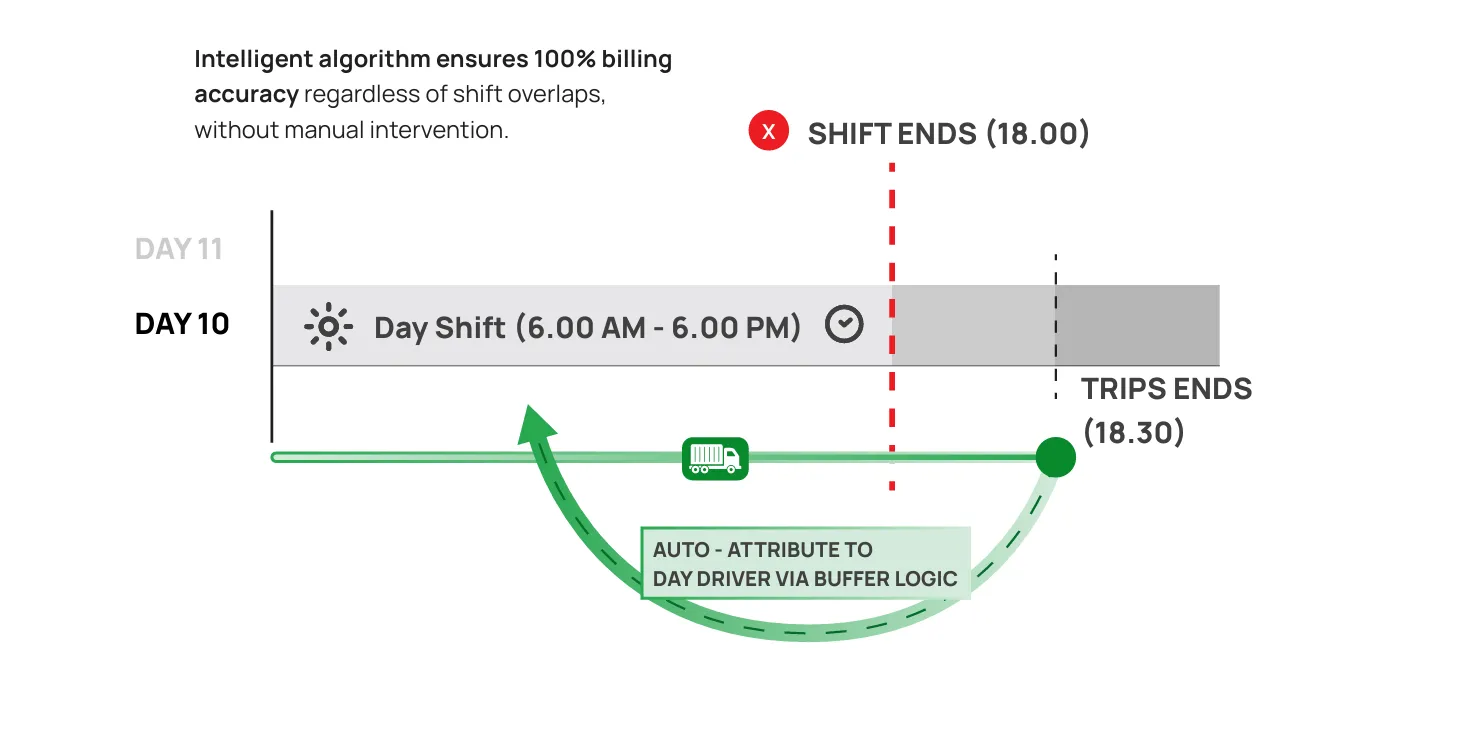
Construction shifts (6 AM–6 PM) are rigid; reality is not. A trip finishing at 6:30 PM used to break the old payroll system. We engineered a buffer-time algorithm that attributes revenue to the correct driver regardless of shift overlaps — ensuring 100% billing accuracy without manual intervention.
Results
From a manpower-heavy operation to a system-driven one.
Tierra expanded to multiple new sites with no additional admin staff. The software handles the communication volume; people focus on the work.
Head office now sees every trip, every litre of fuel and every vehicle location live — no more waiting for notebooks to arrive. And because drivers were met where they already are, on WhatsApp, adoption was immediate and total.
If your managers spend all day calling drivers instead of building your business, you have a coordination bottleneck.
What changed
- Scalability
- Expanded from 1 to 7+ sites with zero additional admin staff — the software handles the communication volume
- Direct salary savings
- ₹54,00,000+ by removing manual data-entry teams and reducing coordination headcount per site; the system paid for itself in Q1
- Data latency
- 14 days → real time: head office sees every trip, every litre of fuel and every vehicle location live
- Driver adoption
- 100% — by meeting drivers where they already are, on WhatsApp